UK Gambling Commission Backs Police Raid on Unlicensed Gambling Sites in Sheffield and Doncaster
Written by Jakob Reed · Aug 19, 2026

UK Gambling Commission Backs Police Raid on Unlicensed Gambling Sites in Sheffield and Doncaster
The UK Gambling Commission joined forces with South Yorkshire Police for a targeted operation against illegal gambling dens operating in Sheffield and Doncaster, and this joint effort zeroed in on unlicensed venues suspected of ties to organised criminal networks. Authorities conducted coordinated actions that focused on sites running without proper licences under the Gambling Act 2005, which means any casino-style activity at these locations violated existing regulations. Officers moved in on multiple premises where evidence pointed to high-stakes games hosted outside the oversight of licensed operators, and the raids aimed to disrupt networks that often use such dens to launder money or fund other illicit enterprises. Observers note that these kinds of operations form part of a broader pattern where regulators work directly with local forces to close gaps in enforcement, and the Commission provided specialist intelligence that helped officers identify key locations and gather necessary warrants. Data from similar past actions shows that unlicensed sites frequently attract individuals seeking games that avoid standard age checks or responsible gambling measures, which creates additional risks for participants and communities alike. In Sheffield and Doncaster the teams seized gaming equipment along with records that could reveal connections to wider criminal groups, while the Commission confirmed its role centred on supporting the legal framework that governs all gambling activity across England, Scotland and Wales.Scope of the Coordinated Action
Police teams executed warrants at several addresses in both cities during the same timeframe, and this synchronised approach prevented operators from moving equipment or alerting others once the first site came under scrutiny. The Gambling Commission supplied regulatory expertise that clarified which activities crossed the line into unlicensed operation, because venues offering games like roulette or blackjack without a licence face immediate closure and potential prosecution. Records indicate that suspects linked to these dens sometimes manage multiple locations through informal networks, and the joint operation gathered evidence that could lead to charges under both gambling laws and organised crime statutes.
Those who study enforcement trends point out that South Yorkshire Police have handled several comparable cases in recent years, yet the addition of direct Commission support allows for faster identification of high-risk targets. Figures released through official channels reveal that illegal gambling sites can generate substantial cash flows that bypass tax obligations, and investigators collected financial documents during the Sheffield and Doncaster visits to trace those flows. The action also included checks on staff and patrons present at the time, because individuals working in unlicensed environments often lack the training required at regulated premises.
Legal Context and Regulatory Role
Under current UK rules any premises offering gambling facilities must hold an operating licence issued by the Gambling Commission, and failure to obtain one turns the activity into a criminal offence. The Commission maintains a public register of licensed operators so that people can verify legitimacy before participating, and the recent operation in South Yorkshire demonstrated how that register helps police distinguish between compliant businesses and those operating outside the system. When unlicensed dens surface, regulators typically supply guidance on evidence standards that strengthen prosecutions, and in this instance the Commission’s input helped officers build cases that address both gambling violations and potential links to serious organised crime.
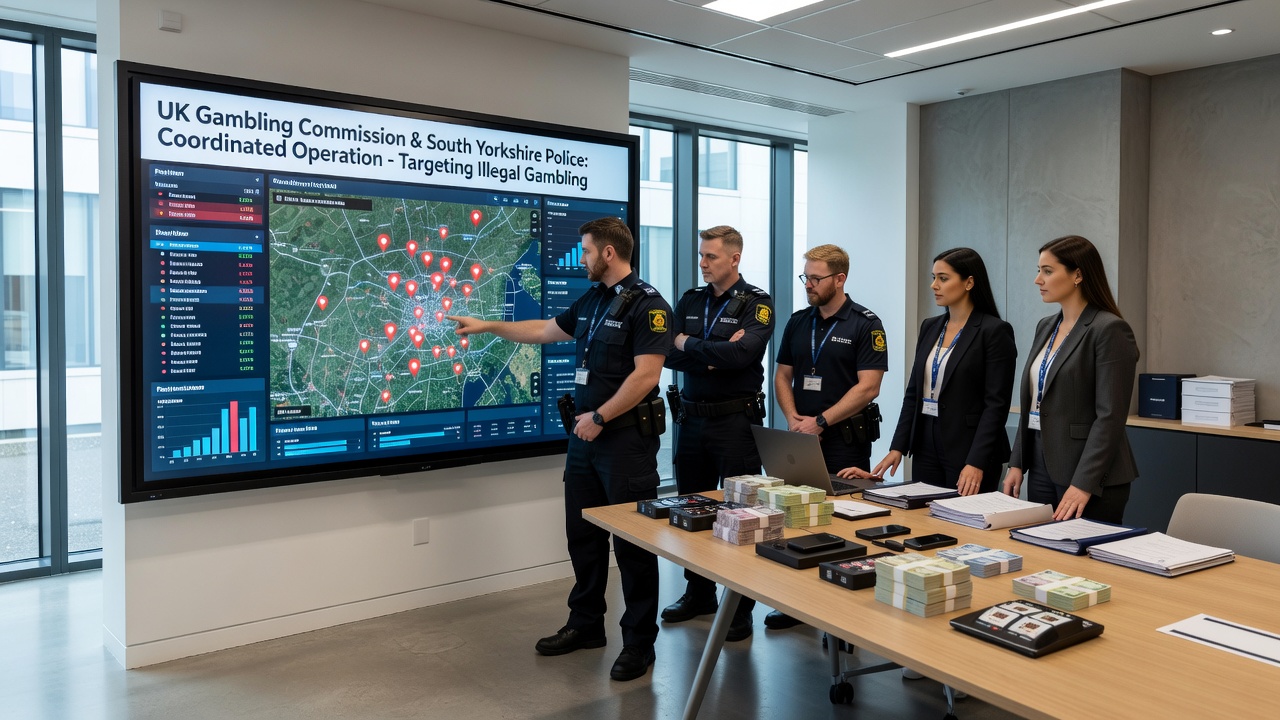
August 2026 saw continued emphasis on these partnerships as part of wider efforts to keep gambling markets free from criminal influence, and the Sheffield and Doncaster raids fit into that ongoing timeline. Local forces benefit from the Commission’s access to industry data and complaint records, which can highlight venues that suddenly appear or change hands frequently. Once premises are shut down, authorities often work to prevent re-opening by monitoring the same addresses and sharing intelligence across regions, and such follow-up steps reduce the chance that operators simply relocate a short distance away.
Impact on Communities and Future Steps
Residents in affected neighbourhoods sometimes report increased foot traffic and noise around suspected dens, and the enforcement action aimed to restore order while removing opportunities for associated anti-social behaviour. Investigators collected digital records alongside physical equipment, and analysis of those materials could uncover payment methods or customer lists that point to larger networks. The Commission continues to encourage anyone with information about unlicensed gambling to report it through official channels, because public tips have helped launch several previous operations across the country.
Prosecutors will review the evidence gathered in Sheffield and Doncaster to decide on charges, and outcomes in similar cases have ranged from fines to prison sentences depending on the scale of activity and prior records of those involved. The joint model used here allows regulators and police to pool resources efficiently, and future actions may replicate the same structure when intelligence indicates concentrated illegal activity in specific towns or cities. Observers note that sustained collaboration remains essential because criminal groups adapt quickly and may shift tactics once one set of sites is closed.
Conclusion
The operation supported by the Gambling Commission and carried out with South Yorkshire Police in Sheffield and Doncaster illustrates how regulatory and law-enforcement bodies combine efforts against unlicensed gambling. Evidence collected during the raids will inform subsequent legal proceedings, while the focus on suspected organised crime links underscores the broader stakes involved. Ongoing monitoring and intelligence sharing between agencies will determine whether similar actions follow in other areas, and the framework established by the Gambling Act continues to guide all such enforcement work.