How Volatility Levels in Slot Titles Affect the Practical Value of Deposit-Free Promotions
Written by Jakob Reed · Aug 26, 2026
How Volatility Levels in Slot Titles Affect the Practical Value of Deposit-Free Promotions
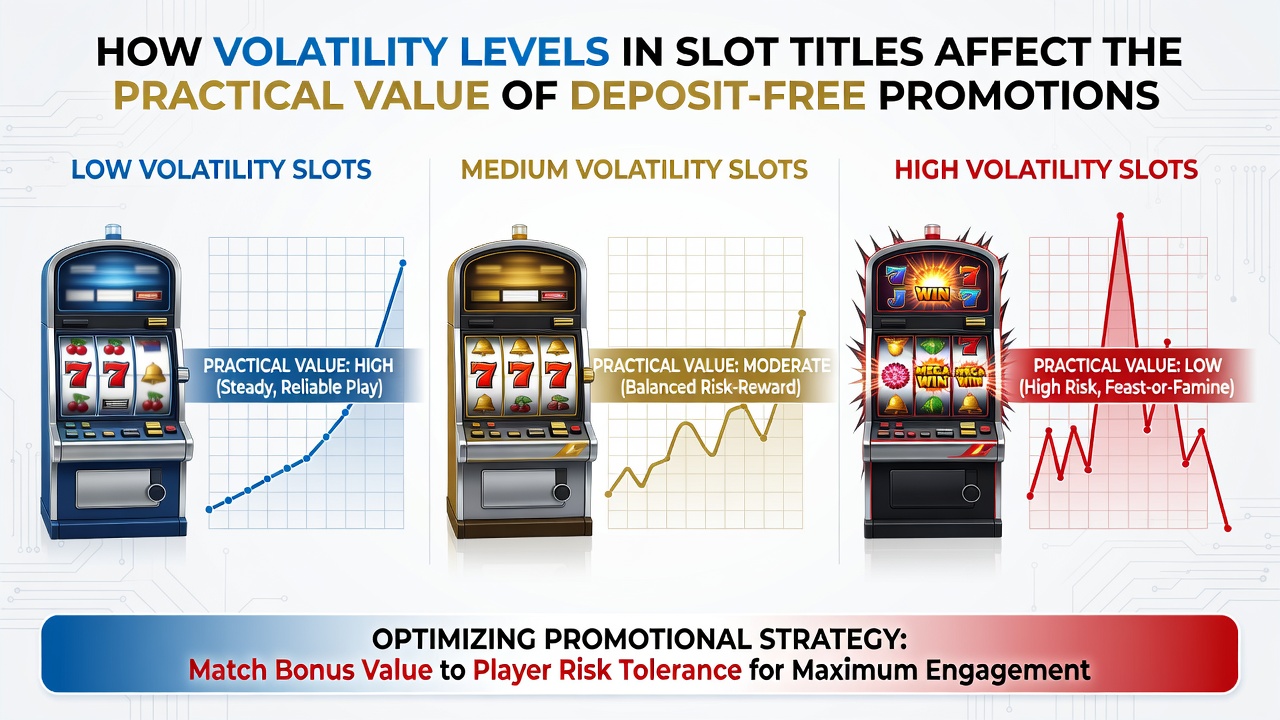
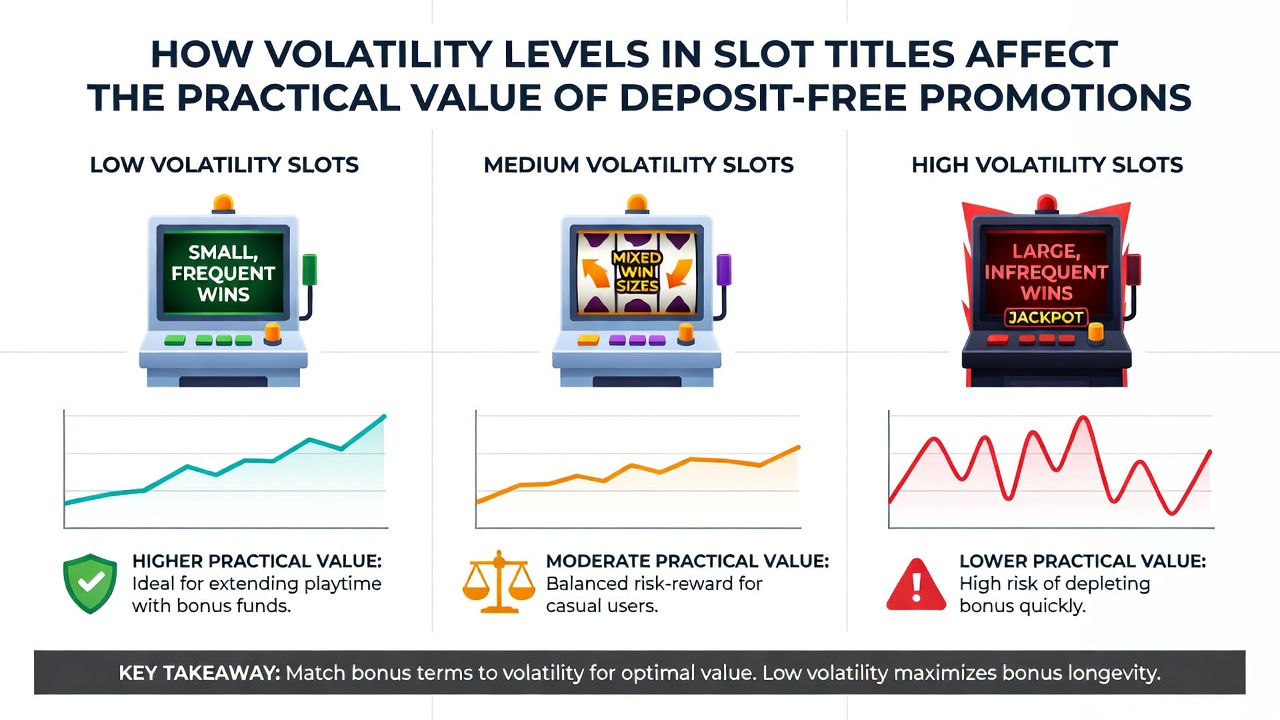
Slot volatility refers to the frequency and size of payouts that players encounter during gameplay, and this characteristic directly shapes how deposit-free promotions deliver results in practice. Low-volatility titles produce smaller wins at regular intervals while high-volatility games deliver infrequent but larger returns, creating measurable differences in how bonus funds convert into withdrawable cash once wagering requirements enter the equation.
Defining Volatility Categories in Modern Slots
Developers categorize volatility into low, medium, and high tiers based on payout distribution patterns, and industry data from multiple markets shows these tiers influence player retention metrics differently. Low-volatility slots often feature hit frequencies above 30 percent with modest multipliers, whereas high-volatility options drop hit rates below 20 percent while offering multiplier potential that exceeds 100x on single spins. Medium-volatility games occupy the middle ground with balanced hit rates around 25 percent and moderate multiplier ranges, according to aggregated reports from gaming analytics firms operating across North American and European jurisdictions.
Mechanics of Deposit-Free Promotions
Deposit-free promotions typically arrive as free spins or small cash credits that carry wagering requirements ranging from 20x to 50x the bonus amount, and these conditions determine the effective value once applied to specific slot titles. Operators set these requirements to manage risk exposure, yet the underlying volatility of chosen games alters the statistical likelihood of clearing those thresholds before bonus funds expire. Figures from regulatory filings in several provinces indicate that average clearance rates on no-deposit offers vary significantly depending on the volatility profile of games players select during the promotional period.
Interaction Between Volatility and Wagering Requirements
High-volatility slots create longer dry spells between wins, which extends the number of spins needed to meet wagering targets and increases the chance that bonus credits reach expiration without full conversion. In contrast, low-volatility titles generate steady small returns that accumulate toward the requirement more predictably, although the smaller individual wins may require more total volume to reach the same threshold. Research compiled by academic groups studying gambling behavior in Australia and Canada demonstrates that clearance probability drops by measurable percentages when players apply high-volatility titles to time-limited no-deposit offers.
Regional Data Trends Observed Through August 2026
Regulatory submissions from multiple international bodies through August 2026 reveal consistent patterns where players using no-deposit credits on high-volatility releases report lower average completion rates compared with those selecting medium or low options. One analysis of transaction logs across several licensed platforms indicated that low-volatility selections cleared requirements in roughly 40 percent more cases than high-volatility alternatives under identical bonus terms. These outcomes hold across different operator structures because the core payout distribution mechanics remain tied to the game mathematics rather than platform-specific rules.
Practical Examples from Player Transaction Records
Transaction histories examined in industry studies illustrate cases where a 20-spin no-deposit package on a high-volatility title produced zero returns until the final spins, leaving insufficient balance to complete remaining wagering before the offer window closed. Equivalent packages applied to low-volatility games yielded incremental wins that allowed players to sustain play long enough for full requirement satisfaction in a greater proportion of sessions. Observers note that these differences compound when operators restrict eligible games or impose maximum bet limits during promotional play, further constraining strategy options for high-volatility selections.
Mathematical Considerations for Bonus Valuation
Return-to-player percentages combine with volatility settings to determine expected value calculations, and data from simulation models used by testing laboratories shows that high-volatility titles produce wider outcome distributions even when overall RTP remains comparable to low-volatility counterparts. This wider spread means the practical value of a fixed no-deposit amount fluctuates more dramatically depending on which volatility tier receives the credits. Those who have reviewed large datasets from multiple markets confirm that variance in clearance outcomes grows with volatility level, independent of any single regulatory framework.
Strategic Adjustments Operators Implement
Some operators adjust eligible game lists or wagering multipliers according to volatility ratings to balance promotional appeal with risk management, and records from licensing reviews indicate these adjustments appear more frequently in markets where detailed game data must accompany promotional filings. Such measures aim to align player expectations with actual conversion probabilities without altering the stated bonus terms. Evidence from compliance reports suggests these calibrated approaches maintain consistent average player outcomes across different volatility profiles when applied systematically.
Conclusion
Volatility levels in slot titles establish clear parameters around how deposit-free promotions translate into realized value once wagering requirements apply. Low-volatility games support steadier progress toward completion targets while high-volatility options introduce greater outcome variability that can either accelerate or derail bonus conversion depending on short-term results. Data collected across jurisdictions through August 2026 continues to document these effects through transaction analysis and simulation, providing operators and players with quantifiable patterns that influence promotional design and game selection decisions alike.